Table of Content
These solutions complement each other to create an intelligent, connected home. The smart home industry is transitioning towards automation and digitalization. Connected home startups and scaleups are developing solutions aimed at providing homeowners with the best home experience while maintaining safety. Smart home connectivity, smart home security, personalized health management, and next-generation entertainment are some major smart home trends. Many smart home owners are also integrating robotics into their daily lives to automate mundane tasks. Many smart home trends are in the development process and are witnessing rapid innovation.
Rainwater harvesting systems and intelligent irrigation systems contribute to the more efficient use of water. Asia Pacific is predicted to grow with the highest CAGR during the projection period. The increasing demand for automation solutions from residential applications is projected to drive growth in this region. The region's major players are focusing on cooperating with other well-known companies to create and deploy innovative smart type of home products. SmartThings’ app allows users to control, automate and monitor their various smart devices, including motion sensors, locks, electrical outlets, speakers, thermostats and garage door openers. Startups require experienced employees, investors, and suppliers, so the local environment counts for a lot.
De-Positioning: The brand strategy mastered by Apple and Starbucks
By targeting technology-ready customers and highlighting the aspects of smart technology that improve customers’ lives, your marketing messages will convince more customers to make the easy switch to smart home technology. (See what we did there? Home Alone quote!) You can learn more about smart home technology in our previous blog post The promise and challenges of smart home energy management. The majority of US and Canadian consumers use smart technology every day in the form of a smartphone. In Canada, that percentage is slightly higher, says Statista, an online statistics database. In fact, most aspects of our lives are changing due to smart technology—from communications, cities, healthcare, transportation, manufacturing, and even our homes. Smart home technology is on the rise and the US smart home market is expected to reach $41.7 billion in revenue by 2023, according to Statista’s Smart Home market analysis.

The startup’s system, Shunya Care, tracks performance data and generates a complete solar power plant at the micro-panel level. Based on real-time data, it optimizes energy generation to ensure peak efficiency without breakdown. This allows homeowners to bring their emissions as well as their energy bills down to zero and keep them there all the time. It includes a modular main control unit and two magnetic lithium-ion battery modules, which can be expanded according to energy needs.
Can a Smart Home Be Hacked?
Touchless technologies provide an ability for operating without physical contact and have innovations like touchless floor cleaning, touchless hand sanitizing, and touchless doorbells. Communication between smart home devices is critical for intelligent home control and operation. Wireless communication establishes a network of in-home devices, converting the regular home into a connected one. With communication networking technologies, smart home appliances work together automatically and act like an entire ecosystem. To achieve this, startups provide various controllable solutions, including wireless mesh networking, communication technologies, and wireless protocols.
With consumers increasingly opting for sustainable lifestyles, initiatives to reduce emissions are also making their way to homes. Some of these innovations include the use of renewable energy, sustainable materials, and rethinking water storage and conservation. With the incorporation of renewable energy through photovoltaic cells, solar hot water harvesting, and energy harvesting, homes have access to sustainable energy.
Smart Home Systems
Most importantly, Samsung encrypts and securely protects this data to ensure that the device’s location is not divulged to anyone except the owner. From Jung’s viewpoint, this path allows Samsung to embrace its futuristic ambition of a completely integrated smart home where things just work. There is no need to interact with multiple apps to achieve the desired results.
Adept hackers, for example, can gain access to a smart home's internet-enabled appliances. In October 2016, a botnet called Mirai infiltrated interconnected devices of DVRs, cameras, and routers to bring down a host of major websites through a denial of service attack, also known as a DDoS attack. Governments and local players are likely to increase their initiatives and investments, resulting in continued growth.
“Universal control” apps likeGideon, Muzzley, Simple Commands, Yeti, and Yonomi work by allowing the user to link multiple device accounts to a single app, and then to use that app to control the devices. In some ways this is like the “universal remote control” people use to overcome the situation of separate remote controls for their TV, VCR, DVD player, Hi-Fi sound systems etc. These apps vary quite a bit in terms of the ecosystems they support and the depth of their integrations but are still a valid option. Advanced lighting solutions allow customizing light according to the preferences and controlling it remotely, eliminating the need for traditional wall switches. Intelligent lighting provides the extent of the functionality of traditional home lighting, by giving over it automatic or wireless control with the phone or smart assistant. Compared to traditional lighting solutions, advanced lighting solutions are energy efficient, generating less heat and consuming less energy.
Finally, privacy is becoming a much more significant concern for today’s consumers who have smart home aspirations. These concerns are scaling as the quantities of smart home devices increase in the average home, top the point where I believe that customers are purchasing brands based on privacy considerations. Samsung has one of the stronger privacy postures in the smart home space and that should be applauded. However, the company, who is dependent on Android for its smartphones, needs to differentiate from Google. Many consumers have a less-than-fond perception of Google in the privacy realm.
Samsung recognizes when it comes to the smart home ecosystem, a “mix and match” approach is the only way to provide the maximum amount of device support flexibility. As such, the company’s portfolio offers low-cost hub and sensors that support hundreds of compatible connected devices across the smart home spectrum. While the smart home offers convenience and cost savings, there are still challenges. Security risks and bugs continue to plague makers and users of the technology.
The startup’s technology enables a connected product to customize the user experience on the fly and to provide various access rights for monitoring and control of the home attributes, such as lighting, heating, and appliances. Key firms are concentrating their efforts on the development of IoT platforms and related technology that may be employed in smart home goods. According to a report published by Bosch in May 2021, 10 million products in 2020, – including power tools, residential appliances, and heating systems – were already connected. Bosch is aiming to establish a strong position in the smart product's market for connected security and climate-control solutions by making the home even more user-friendly.
BCG delivers solutions through leading-edge management consulting, technology and design, and corporate and digital ventures. We work in a uniquely collaborative model across the firm and throughout all levels of the client organization, fueled by the goal of helping our clients thrive and enabling them to make the world a better place. Prioritize device security and consumer trust.A lack of vendor focus on security will lead to privacy issues and negatively affect a brand’s reputation. Expect a high level of scrutiny on this front from both consumers and businesses. Harness the power of an ecosystem.A smart-home device becomes powerful when it links together individual systems within the home.

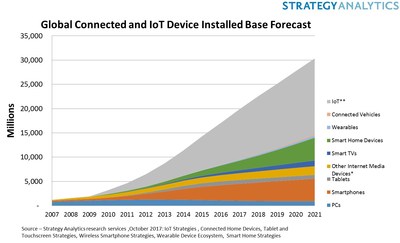
A smart home allows homeowners to control appliances, thermostats, lights, and other devices remotely using a smartphone or tablet through an internet connection. Smart speakers are widely recognized as the fastest adopted consumer electronic device in history. They’ve reached 25 percent market penetration in North American in less than four years.
They need to think about partnerships and view themselves as part of an ecosystem that brings real value to consumers through seamless product integration and services. Within the healthcare industry, there is a growing development of products focused on individual human health. To this end, personalized health management incorporates a range of innovative technologies to deliver care at home. Some of these technologies include health monitoring, sleep tech, smart pet care, and smart health appliances. Smart health monitoring enables emergency detection, illness diagnosis, and fall detection, applications that particularly help senior or chronic disease patients. Focusing on improving the sleep experience, smart appliances were developed for health conditions tracking and improving sleeping habits.




No comments:
Post a Comment